The Frontier of Tech Innovation
Aavishkar 2026 is Kathmandu University's celebrated annual technology carnival. Centered at the pristine classrooms and lakes of Dhulikhel, we bring together high school engineering aspirants, top-tier university innovators, and robotics clubs from across Nepal and internationally.
We celebrate the grit, craftsmanship, and raw creativity needed to forge hardware from basic components, gears, and code.
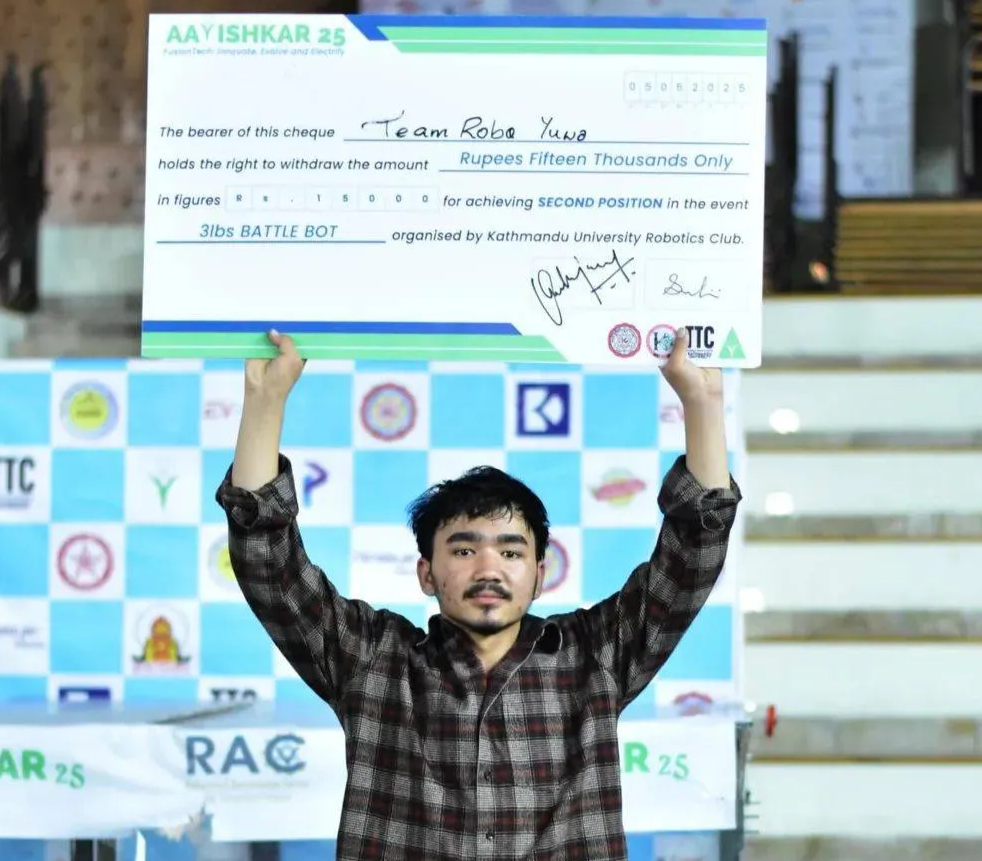
Mechanisms of Aavishkar
Every achievement is a challenge, Aavishkar brings together Nepal's brightest innovators to build, compete, and push engineering beyond the classroom. Where ideas are tested, machines are built, and champions are made.
Robotics & Engineering Events
Choose your arena. Click on the event names below to view full details, entry fees, lucrative prize pools, rules, and schedules.
Aavishkar '26 Festival
Welcome to the grand technology arena of Kathmandu University. Below, you can view the primary comprehensive festival info showcasing our major events, cumulative prize pools of NPR 200,000+, partner organizations, and schedules. Use the side navigation links to inspect rules, entry fees, and posters for individual challenges.
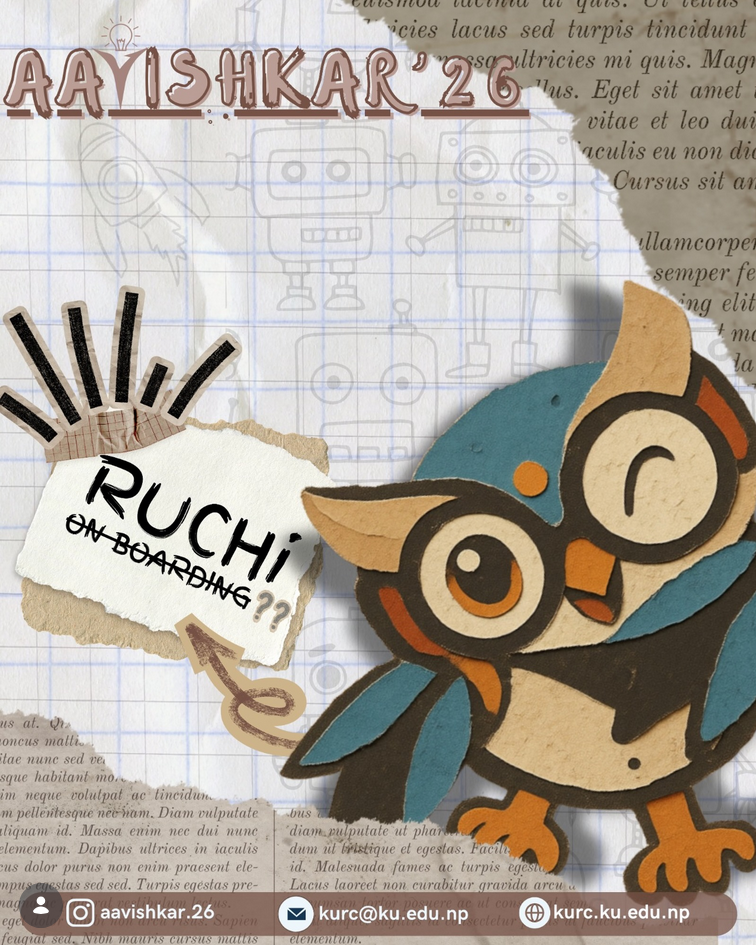
⚔️ 15 KG Robo-War Duel
A heavy-weight combat robotics competition where teams design and assemble a custom-built robot weighing 15 kg (±1 kg) to battle in a secured arena. The ultimate test of structural integrity, motor control systems, weapon design, driving strategy, and team endurance.
Rulebook & Design Specifications
- Robot Weight: 15 kg ± 1 kg maximum weight threshold.
- Weapons allowed: Rotating spinners, pneumatic flippers, defensive wedges, and hammers. (No fire/explosives/corrosives).
- Match structure: 3-minute timed matches in the protected steel mesh arena. Points awarded for aggression, damage, and control if no knockout.
- Team requirements: Max 5 members per team. Valid team name and payment receipt are mandatory.
- Registration Deadline: 6 July 2026.
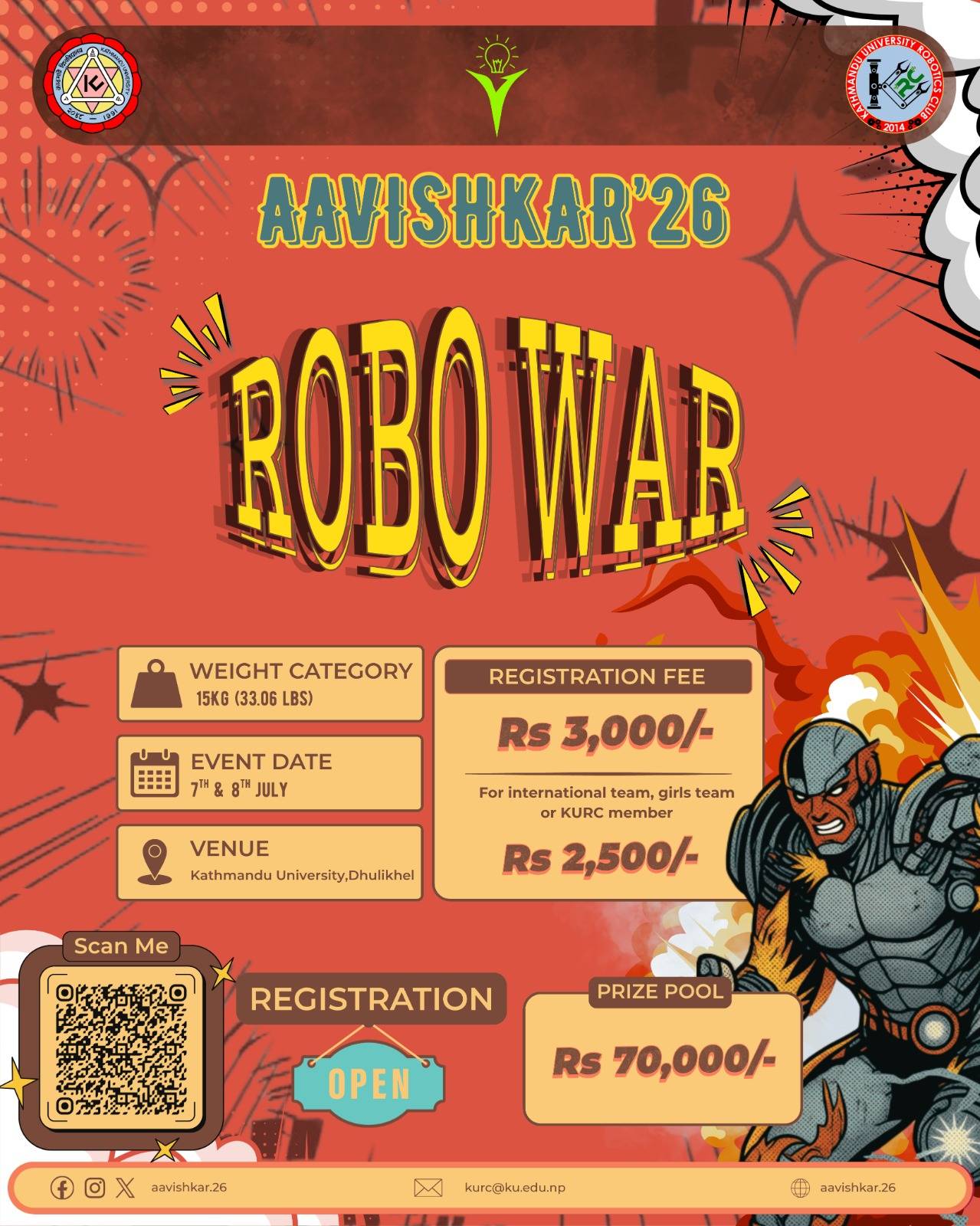
💧 Aquabot Challenge
An environmental robotics challenge where remote-controlled or autonomous aquatic vessels compete to harvest and collect floating synthetic waste from a simulated open water body, focusing heavily on sustainability and maritime steering systems.
Rulebook & Guidelines
- Objective: Collect different types of floating plastics and wood debris and deposit them in the landing zone within the time limit.
- Control: Either fully autonomous operations or manual control over RF/WiFi frequencies.
- Team Size: Maximum of 4 participants per registered vessel.
- Discounts: NPR 1,600 if at least one girl/KURC member. 50% discount (NPR 1,000) for all-girls crews.
- Registration Deadline: 5 July 2026.
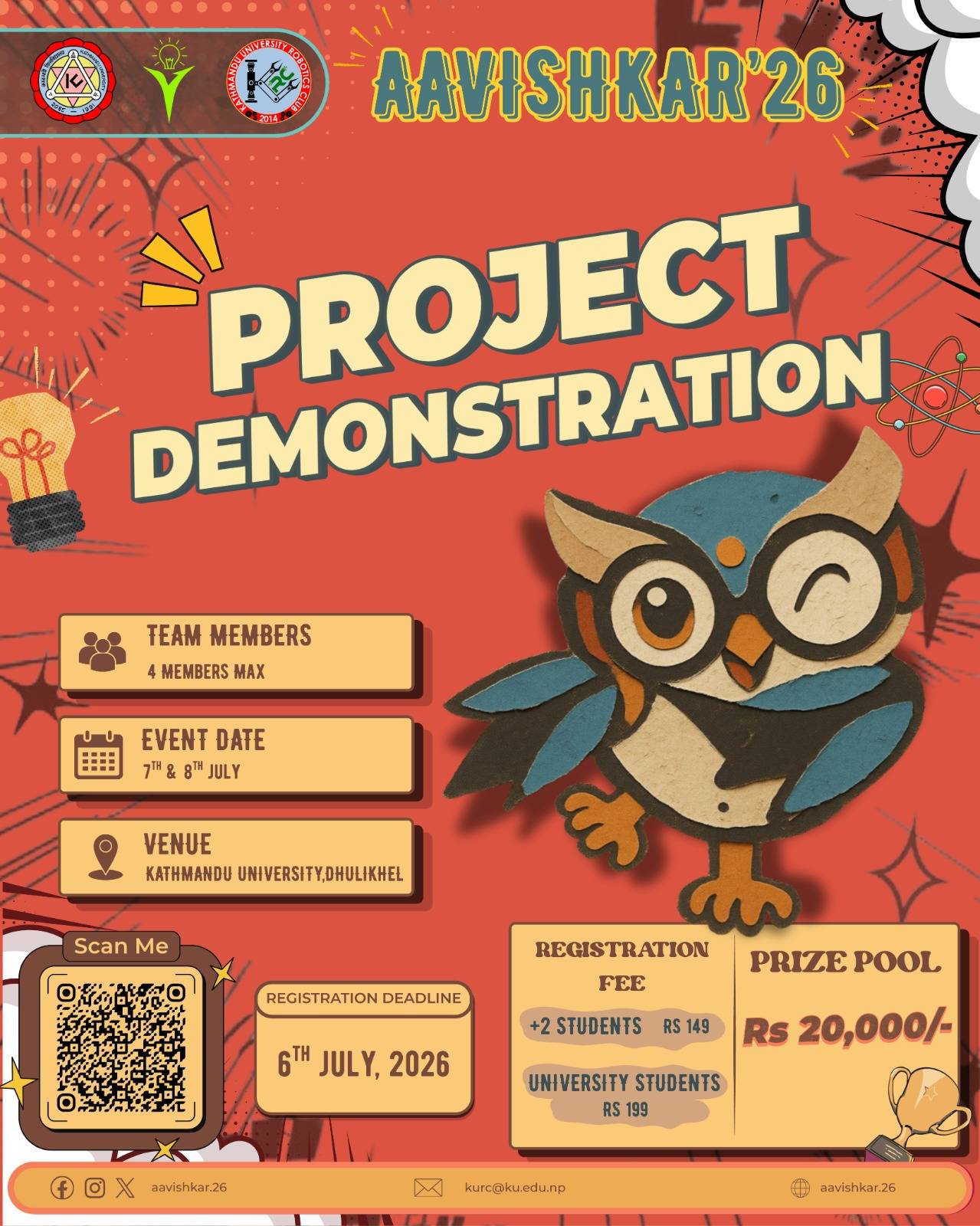
💡 Project Demonstration Showcase
An open innovation exhibition where student inventors showcase engineering solutions, hardware prototypes, AI/IoT devices, or mechanical designs addressing real-world crises, climate change, or community hardships.
Submission Requirements & Evaluation
- Abstract Submission: Brief project abstract, flow diagrams, and photographs must be submitted via registration.
- Academic Levels: Highschool (+2 Level) and University levels compete in distinct categories.
- Judging Criteria: Innovation (30%), Technical Implementation (30%), Practical Usefulness (20%), and Presentation & Public Voting (20%).
- Team Size: Maximum of 4 members.
- Registration Deadline: 6 July 2026.
🤖 Line Following Robot (LFR)
The ultimate speed duel of autonomous navigation. Program your microcontroller and align sensor arrays to guide an autonomous robot across a complex line-based racetrack filled with sharp bends, loops, and obstacles in the shortest possible time.
Track Dimensions & Specifications
- Track color: Black path on white background (or vice versa), width 3cm.
- Dimensions: Max robot footprint is 20cm x 20cm. No height restrictions.
- Autonomous only: No external communications (Bluetooth, WiFi) during the run.
- Discounts: 50% for all-female teams. 25% if at least one girl member or KURC member.
- Registration Deadline: 1 July 2026.
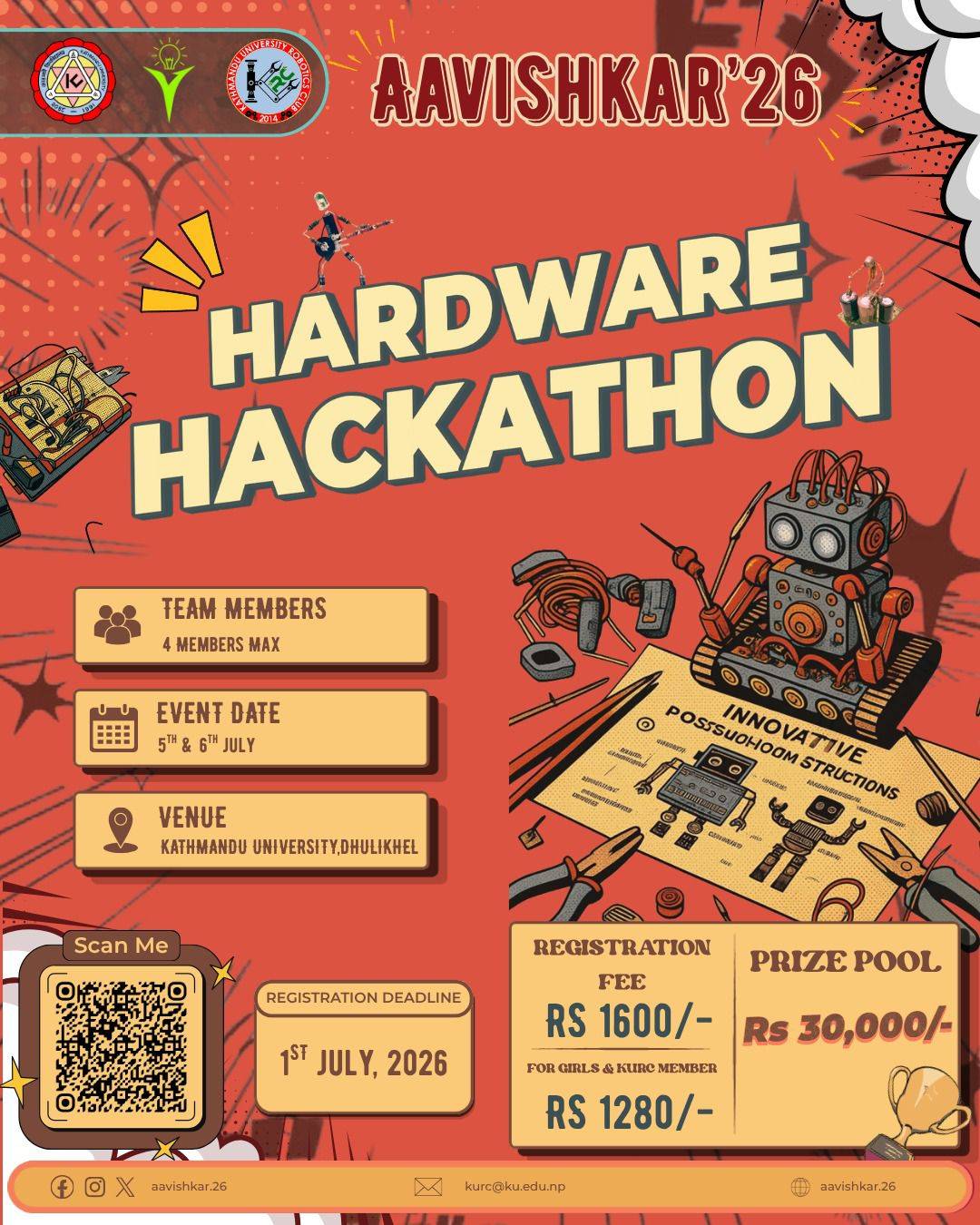
🛠️ Hardware Hackathon
An intense, time-constrained prototyping event where developers and embedded engineers design, solder, program, and demonstrate working hardware-software solutions targeting modern smart grids, sensor networks, and agriculture.
Focus Technologies & Format
- Expected Tech Stack: ESP32, Arduino, Raspberry Pi, LoRaWAN, Zigbee, PCB prototyping, solid modeling.
- Duration: 24-hour consecutive design lock-in inside the lab. Mentorship provided.
- Team limits: Maximum of 5 participants (1 leader + 4 members).
- Registration Deadline: 1 July 2026.
Festival Timeline
Plan your journey to Dhulikhel. Make sure your crew is in position before the starting signals.
Registration Lock
Final deadline to submit team rosters and verify fee transactions for Line Following and Hardware Hackathon events.
Hardware Hackathon
24-hour marathon prototyping lock-in at Kathmandu University's Information Technology Center labs.
Combat & Demo Registration Closes
Final slots for the 15 KG Robo-War and open Project Demonstrations lock down at midnight.
Robo-War, Demo, and LFR Matches
Gates open for spectators. Combat robots clash in the steel arena, and innovators present abstract prototypes inside the lobby.
Aquabot Sanitation Race
Aquatic machines cruise Saraswati Pond to filter and recover waste floats under judge evaluation.
Grand Award Ceremony
Crowning the winners of the arenas and distributing prizes worth NPR 200,000+ at Kathmandu University main auditorium.
Interactive Registration Estimator
Select your event and check standard discount toggles. Our dynamic ticketing machine will automatically calculate your final discounted fee.
Kathmandu University Robotics Club